Breast Center
Breast Center – A team of top specialists and comprehensive breast diagnostics in one place.
Breast health is extremely important for every woman, and regular check-ups are the most important step in early detection of changes and maintaining health.
At Poliklinika Natal, we have established a Breast Center that brings together a team of top specialists with many years of experience in diagnosing, treating, and monitoring breast conditions.
The Center is equipped with state-of-the-art, latest-generation medical equipment that enables accurate, reliable, and timely diagnostics.
Expert team of the Breast Center
The Breast Center team consists of experienced specialists with extensive clinical experience in diagnosing and treating breast conditions:
- Prof. Dr. Dragana Bogdanović Stojanović – Specialist in Radiology and Subspecialist in Oncology
- Asst. Prof. Dr. Sci. Med. Zorka Inić – Specialist in General Surgery and Subspecialist in Oncology
- Dr. Vojislav Vojo Mandić – Specialist in Radiology, Head of the Breast Disease Diagnostics Department, Clinical Center of Montenegro
- Dr. Dušanka Radović – Specialist in Radiology
- Dr. Katarina Kalezić – Specialist in Radiology
- Dr. Jelena Obadović – Specialist in Radiology
Breast ultrasound diagnostics – Samsung V8
The Breast Center uses the latest-generation Samsung V8 ultrasound system.
Samsung Crystal Architecture™ technology, combined with Intelligent Assist functions powered by artificial intelligence, enables:
- exceptionally clear, high-resolution imaging
- precise detection of changes in breast tissue
- detailed visualization of glandular tissue
- assessment of lymph nodes and surrounding structures
- breast elastography for non-invasive assessment of tissue stiffness and structure
- greater diagnostic confidence
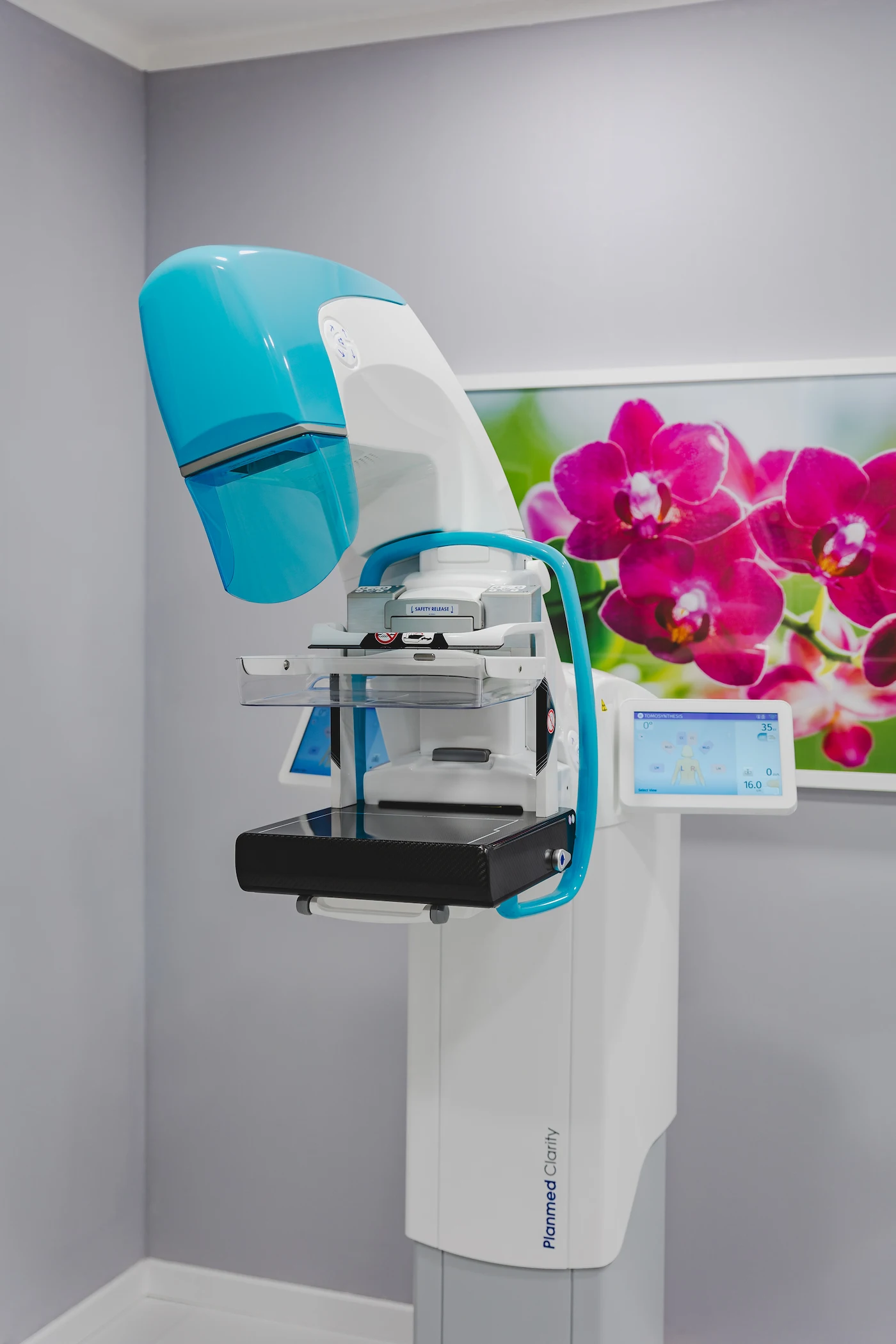
Digital mammography with tomosynthesis (3D)
Modern digital mammography with tomosynthesis enables layered breast imaging and a significantly more detailed view of tissue compared to standard mammography.
Benefits of the exam:
- early detection of changes
- precise detection of microcalcifications
- better visibility of small lesions
- fewer additional images needed
- minimal radiation dose
- the gold standard for breast cancer screening after age 40
Consultation with a surgical oncologist
In addition to modern radiological diagnostics, a consultation with a surgical oncologist plays an important role in assessing and monitoring breast health. Based on the clinical exam and available medical documentation, it is possible to perform a comprehensive assessment and determine the next diagnostic or therapeutic approach.
The exam is recommended for women who notice changes in the breast, have symptoms or an increased risk of breast disease, as well as for those who want a preventive professional assessment.
It is advisable to bring previous test results and medical documentation to the appointment.
Interventional procedures
When additional diagnostic evaluation is needed, the Breast Center at Poliklinika Natal offers interventional procedures for a more precise assessment of breast changes:
- Breast CORE biopsy – a minimally invasive method of taking a tissue sample under ultrasound guidance. It is the gold standard for diagnosing suspicious changes and enables an accurate diagnosis.
- Breast aspiration (FNA – Fine Needle Aspiration) – a minimally invasive method in which a thin needle is used to collect a sample of cells or cyst contents for further diagnostic evaluation.
All procedures are performed on an outpatient basis, with local anesthesia when needed, and the patient can return to daily activities the same day.
Recommended breast screening schedule
From age 20
Breast self-examination helps a woman become more familiar with her breasts and notice any potential changes in time.
It is important to emphasize that self-examination cannot replace a clinical exam, ultrasound, or mammography; it is an addition to regular preventive check-ups.
After age 25
An annual breast ultrasound is recommended, or as advised by your doctor.
After age 40
Mammography with tomosynthesis is recommended. After the first exam, mammography is most often repeated every two years, or more frequently as assessed by the radiologist, in combination with a breast ultrasound.
With a family history, previous changes, or the presence of symptoms, exams may be needed earlier and more often, as advised by your doctor.
Which symptoms should you watch for?
Contact your doctor if you notice:
- a lump or thickening in the breast
- pain that persists or recurs
- nipple discharge
- nipple retraction
- changes in the skin of the breast
- redness or swelling
- a change in breast shape or size
Book an appointment
Caring for breast health starts with regular check-ups.
Breast cancer is completely curable in a large number of cases when detected at an early stage. Since it often causes no symptoms at the beginning, regular preventive check-ups are the most important step toward early detection and successful treatment.